

.svg)


.jpg)

Most car batteries in the UK last between three and five years. Some reach seven on a car that is driven regularly and kept in a garage, and some give up at two after a winter of short trips and cold starts. The range is wide because the number depends far more on how the car is used than on the battery itself.
A battery rarely fails without warning, but the warnings are easy to miss until the morning it will not turn over. In this guide, we explain how long a car battery lasts, what quietly shortens its life, the signs worth acting on early, and what a replacement actually costs.
How Long Does a Car Battery Last?
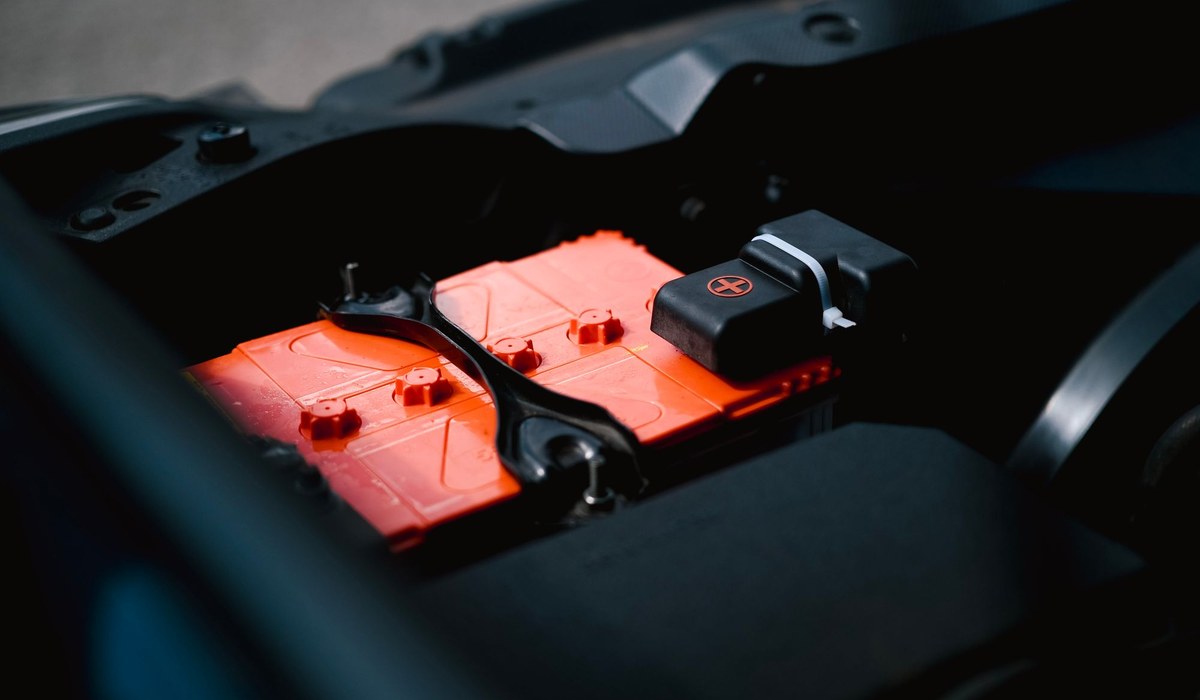
Three to five years is the honest answer for a standard lead-acid battery in a petrol or diesel car driven normally in the UK. Manufacturers often quote four years as a working average, and most garages will tell you they start seeing failures from around year three. Once a battery passes five years, it is living on borrowed time even if the car still starts every morning.
What makes the range so wide is usage. A car that does a 30-minute commute twice a day keeps its battery topped up, because the alternator has time to replace what starting the engine took out. A car that does two five-minute journeys a day never quite gets there, and the shortfall accumulates. Over a couple of years that slow undercharging does real damage to the plates inside the battery, and the capacity never comes back.
Age also matters on its own. A battery degrades gradually whether the car moves or not, which is why a low-mileage car that sits for weeks at a time can need a new battery sooner than a high-mileage one. If you are buying a used car, the battery's age is worth asking about, and our guide on buying a used car covers the other checks worth making.
What Affects How Long a Car Battery Lasts?
Four things account for most of the difference between a battery that lasts three years and one that lasts seven. None of them is dramatic on its own, which is exactly why they get overlooked.
Short Journeys
Starting the engine is the single biggest demand a battery ever faces. The alternator then spends the next stretch of driving putting that charge back. On a journey of five or ten minutes, it does not finish the job, so the battery sets off slightly down and never fully recovers.
Repeat that twice a day for a year and the battery spends almost its entire life partially discharged. That state causes sulphation, where crystals build up on the internal plates and permanently reduce how much charge the battery can hold. It is the most common reason a battery dies early in the UK, and it affects school-run and local-shop cars far more than motorway cars.
How Often You Drive
A car that sits still is not resting. Modern cars draw a small amount of power constantly for the alarm, the immobiliser, the clock and the various control modules, so a parked car slowly drains. Two or three weeks of standing is usually survivable. Two or three months, particularly over winter, often is not.
If you know a car is going to sit for a long period, a trickle charger or smart maintenance charger left connected will hold the battery at full charge and cost very little to run. It is far cheaper than a replacement, and it prevents the deep discharge that finishes a battery off in one go.
Heat and Cold
Cold gets the blame, but heat does more of the long-term damage. High temperatures speed up the chemical reactions inside the battery and evaporate the fluid, which degrades the internal structure permanently. A hot summer does damage you will not notice until the following winter.
Cold then exposes it. At low temperatures the chemical reaction slows, so the battery delivers less of its rated power exactly when the engine needs more of it to turn over against thickened oil. That is why so many batteries fail on the first genuinely cold morning of the year: the summer weakened it, and the cold simply showed you.
Electrical Load and Start-Stop Systems
Dashcams, phone chargers, heated seats and aftermarket alarms all draw power, and some keep drawing it after the ignition is off. Individually the amounts are small. Together, on a car that does short journeys, they tip the balance.
Cars with stop-start systems are a separate case. They restart the engine repeatedly in traffic, so they use specific AGM or EFB batteries built for that duty cycle. Fitting a standard battery to a stop-start car is a false economy: it will not cope with the cycling and will fail early, often within a year.
What Are the Signs of a Failing Car Battery?
A battery usually gives several weeks of warning before it strands you. The signs are subtle, and they are easy to explain away one at a time:
The slow crank is the one worth acting on. It is the earliest reliable signal and the one most drivers ignore, because the car does still start. If you hear it more than once, get the battery tested rather than waiting to find out the hard way.
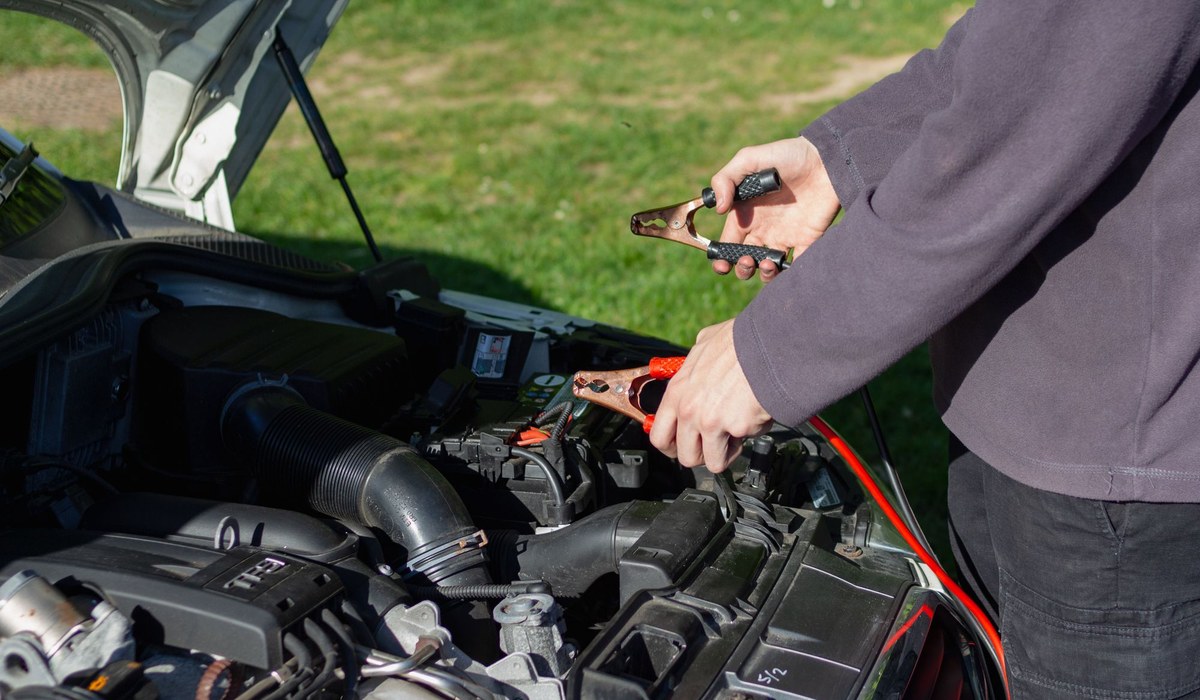
Most garages and parts shops will test a battery free of charge in a few minutes, and the test tells you its actual capacity rather than just whether it currently holds a charge. If you do get caught out, our guide on how to jump start a car walks through doing it safely, though a jump start is a way home rather than a fix.
Why Do So Many Batteries Fail in Winter?
Winter does not usually kill a healthy battery. It finishes off one that was already weak, which is why failures cluster in the first cold snap rather than spreading evenly through the year.
Three things stack up at once. The cold reduces the battery's available power, sometimes substantially at freezing temperatures. The engine simultaneously needs more power to turn over, because cold oil is thicker and harder to move. And the demands on the battery go up, because headlights, heated rear screens, wipers and blowers are all running on journeys that are often short and dark.
A battery at 80% of its original capacity copes with all of that in September and fails in December, having changed not at all in between. If yours is over three years old, testing it in autumn rather than January is the single most useful thing you can do. Our winter driving tips cover the rest of the seasonal checks.
How Can You Make a Car Battery Last Longer?
The principle behind almost every piece of advice here is the same: keep the battery fully charged as much of the time as possible. A battery that spends its life at full charge lasts years longer than an identical one that spends its life at 80%.
In practice that means combining short trips into one longer one where you can, and taking the car for a proper run of at least 20 to 30 minutes every couple of weeks if it mostly does local journeys. Turn off headlights, heaters and heated screens before switching the engine off, so the battery is not asked to carry that load on the next start. Keep the terminals clean and tight, since corrosion adds resistance and stops the battery charging properly.
If the car is going to stand for more than a few weeks, use a smart maintenance charger rather than hoping for the best. And if you are fitting accessories that draw power when parked, such as a hardwired dashcam, make sure whoever fits it uses a circuit that cuts off at a safe voltage. Battery health is part of the wider picture of keeping a car running cheaply, which we cover in how to reduce your car running costs.
How Much Does a New Car Battery Cost in the UK?
For a standard petrol or diesel car, expect somewhere around £70 to £150 for the battery itself, depending on size and brand. Fitting at a garage typically adds £20 to £50, though many parts retailers will fit a battery free or for a nominal charge if you buy it from them.
Stop-start cars cost more. An EFB battery generally lands in the £100 to £180 range and an AGM battery in the £150 to £250 range, because both are built to handle far more charge cycles. On many newer cars the replacement also has to be registered to the car's battery management system with a diagnostic tool, so the fitting is a garage job rather than a driveway one.
It is worth treating the cheapest option with some caution. A budget battery may carry a two-year warranty against a premium one's four or five, and on a car that does short journeys the cheaper battery is the one being asked to work hardest. If the car is due a service anyway, having the battery tested at the same time costs nothing extra, and our guide on how much a car service costs sets out what else is included.
Can You Change a Car Battery Yourself?
On an older car with the battery sitting plainly under the bonnet, yes, and it is a straightforward job. Disconnect the negative terminal first and reconnect it last, keep metal tools away from bridging the two terminals, and make sure the new battery is the same size and specification as the old one.
On many cars built in the last decade it is less simple. Batteries are increasingly hidden under the boot floor, under a seat or behind a wheel arch liner, and cars with intelligent charging systems need the new battery coded in so the car charges it correctly. Skip that step and the car may undercharge the new battery and shorten its life considerably.
There is also the old battery to deal with. Car batteries contain lead and acid and cannot go in household waste. Most garages and parts shops take the old one when they sell you a new one, and household waste recycling centres accept them too. You can find your nearest site through gov.uk.
What About Electric and Hybrid Cars?
Electric and hybrid cars have two batteries, and they behave completely differently. The large traction battery that drives the car is designed to last the life of the vehicle, and manufacturers typically warrant it for around eight years or 100,000 miles against significant capacity loss. Real-world degradation is generally gradual rather than sudden.
The one that strands people is the small 12V battery, which every EV and hybrid still has. It runs the lights, the locks, the screens and the systems that wake the car up, and it fails in exactly the same way and on roughly the same timescale as the battery in a petrol car. An EV that will not switch on has usually lost its 12V battery, not its traction pack.
The practical implication is that EV drivers are not exempt from any of this. Short journeys, long periods of standing and cold weather affect a 12V battery the same way whatever the car is plugged into, so the same three to five year expectation applies.

Conclusion
Three to five years is the working expectation for a car battery in the UK, and where yours lands inside that range is mostly down to how the car is driven. Short journeys, long periods parked up and a hot summer followed by a cold snap are what turn five years into three.
The useful habit is simply to know how old yours is. Once a battery passes three years, a free test each autumn takes minutes and tells you whether you are heading for a cold morning with a car that will not start. Acting on a slow crank in October is a great deal easier than dealing with it in January.
Keeping on top of the small maintenance jobs is part of running a car affordably, and at Ayan we would rather drivers spent their money on the car than on avoidable breakdowns. If you are looking at your next car, you can check your eligibility for halal car finance with a soft search that will not affect your credit score.